
Co-Regulation: Borrowing Our Calm
"Before children can regulate themselves, they first learn to regulate with us."
Have you ever noticed that your child's emotions seem to rise or fall with yours?
If you've remained calm during a difficult moment and watched your child gradually settle, you've experienced co-regulation.
Co-regulation is the process of helping another person's nervous system feel safe enough to return to a calmer, more regulated state.
It isn't about controlling your child's emotions.
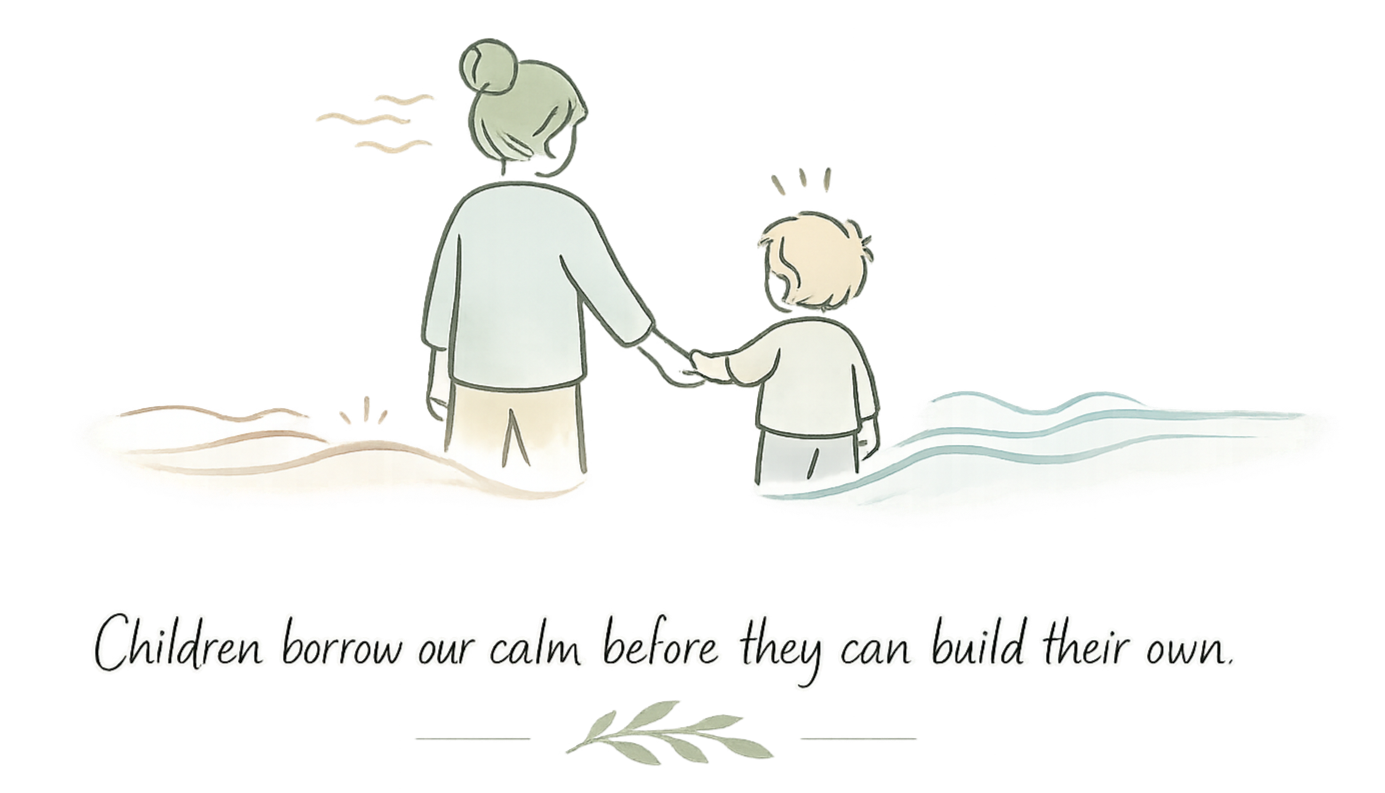
It's about lending them your calm until they're able to find their own.
What Is Co-Regulation?
Children aren't born knowing how to manage frustration, disappointment, anxiety, or overwhelm.
These skills develop over many years.
Before children can self-regulate, they first rely on the calm, supportive adults around them.
Think of co-regulation as borrowing someone else's umbrella during a storm.
Eventually, your child learns to carry their own—but first, they need someone to walk beside them.
Why It Matters
When a child becomes overwhelmed, their brain shifts into survival mode.
In those moments, reasoning, problem-solving, flexible thinking, and communication become much more difficult.
Trying to teach or correct during this time often isn't effective because the brain isn't ready to learn.
A calm, connected adult helps communicate something powerful:
"You're safe. I'm here with you. We'll get through this together."
That feeling of safety allows the nervous system to gradually settle.
What Co-Regulation Can Look Like
Co-regulation doesn't require saying the perfect thing.
Often, it's the small moments that matter most.
You might:
Lower your voice instead of raising it.
Slow your own breathing.
Sit quietly beside your child.
Offer a hug or comforting touch (if they enjoy touch).
Validate what they're feeling.
Give them space while staying emotionally available.
Help meet a basic need like food, water, movement, or rest.
Sometimes saying very little is more helpful than saying a lot.
What Co-Regulation Is Not
Co-regulation is not:
Giving in to every demand
Avoiding boundaries
Ignoring unsafe behavior
Fixing every problem
Making your child happy all the time
You can stay calm, connected, and compassionate while still holding clear, consistent limits.
A Real-Life Example
Imagine your child is frustrated because it's time to leave the playground.
Instead of saying:
"Stop crying. We have to go."
You might say:
"You're really disappointed. You were having so much fun."
You kneel beside them, speak calmly, and give them a moment to feel heard.
Once they're beginning to settle, you might continue:
"It is hard to leave when you're having fun. Let's take one last trip down the slide together, and then we'll head to the car."
The limit hasn't changed.
But your child feels understood, making it easier for their brain to shift from emotional reaction to problem-solving.
Co-Regulation Builds Self-Regulation
Every time we help children regulate, we're helping build the skills they'll eventually use on their own.
Self-regulation isn't something we can demand.
It's something we help develop through repeated experiences of feeling safe, supported, and understood.
Over time, children begin to internalize the calm we've modeled for them.
Questions to Ask Yourself
The next time your child is having a hard moment, consider:
What is my own nervous system doing right now?
Am I responding or reacting?
How can I communicate safety?
What does my child need before they're ready to solve this problem?
Remember, your calm doesn't have to be perfect—it just needs to be present.
Key Takeaway
Children learn to regulate by experiencing regulation with trusted adults.
When we stay connected, offer calm, and support them through difficult moments, we're not just helping them feel better today—we're helping them build the lifelong skills they'll need tomorrow.