
Behavior Is Communication
"If we only focus on stopping a behavior, we may miss what a child is trying to tell us."
One of the core beliefs at Beyond Behavior Speech & Language Therapy is that behavior is communication.
Children communicate in many different ways. Sometimes they use words. Sometimes they use gestures, facial expressions, body language, or AAC. And sometimes, especially when they're overwhelmed, tired, anxious, frustrated, or don't yet have the skills to express themselves, they communicate through their behavior.
This doesn't mean every behavior should be accepted without limits. Rather, it means that behavior gives us valuable information about what a child may be experiencing or needing.
Looking Beneath the Surface
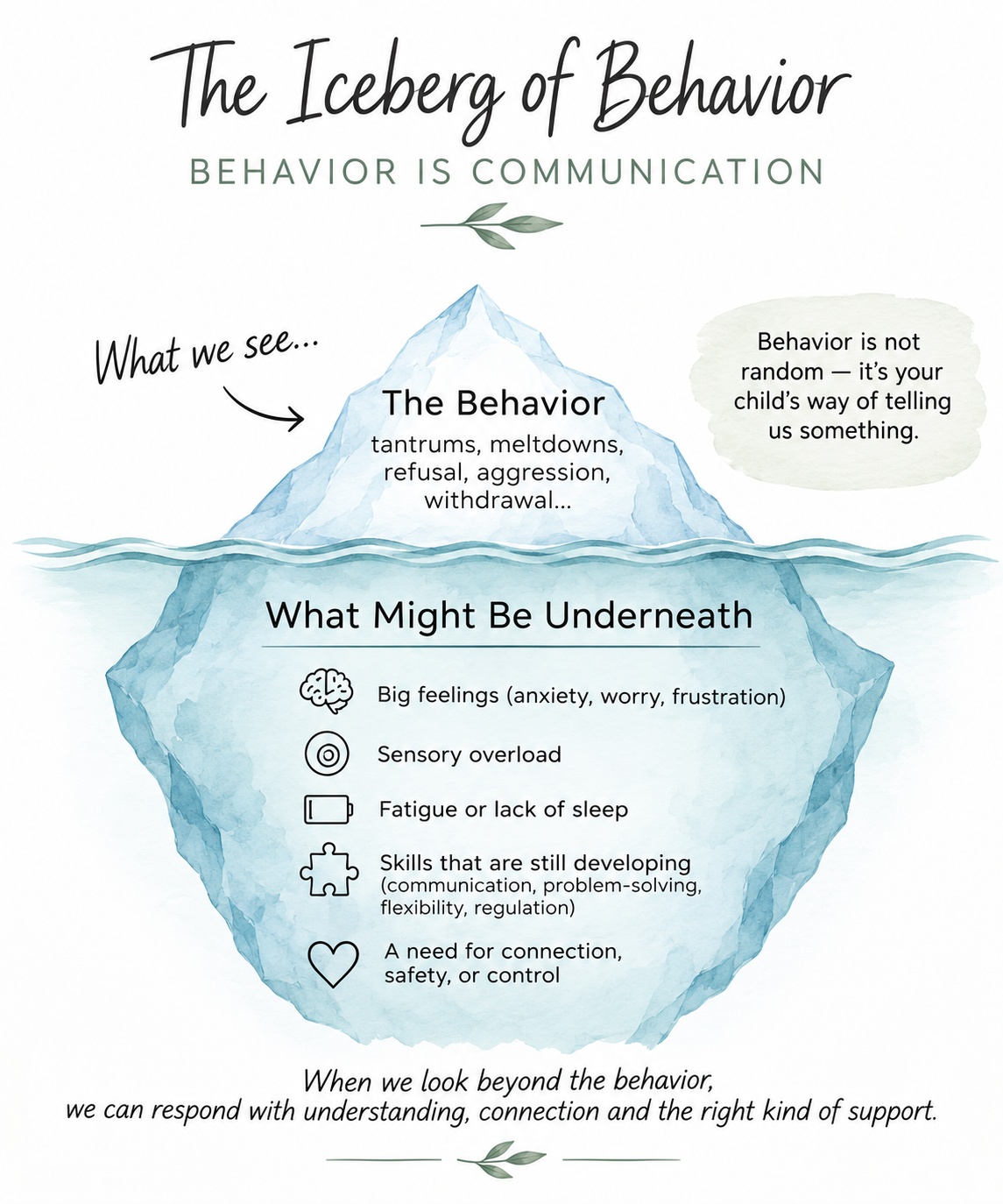
Imagine an iceberg.
The behavior we see is only the small portion above the water. Underneath the surface may be many factors we can't immediately see.
A child may be experiencing:
Difficulty communicating their wants or needs
Sensory overload
Anxiety or worry
Fatigue
Hunger or illness
Difficulty with transitions
Executive functioning challenges
Lagging problem-solving skills
Frustration
A need for connection or reassurance
When we become curious about what is happening beneath the surface, we are often better able to respond in ways that teach skills rather than simply stopping behavior in the moment.
A Different Way to Think About Behavior
Instead of asking:
"How do I stop this behavior?"
Try asking:
"What is my child trying to communicate?"
"What skill might be difficult right now?"
"What happened before this?"
"Is my child feeling safe, connected, and regulated enough to meet this expectation?"
"How can I help before I teach?"
These questions shift us from reacting to understanding.
A Real-Life Example
Imagine a child who throws their backpack across the room after school.
At first glance, it may look like defiance.
But after looking a little deeper, we might discover that the child spent all day working hard to stay regulated in a noisy classroom, was overwhelmed by several unexpected schedule changes, skipped most of lunch because the cafeteria was too loud, and is mentally exhausted by the time they walk through the front door.
The behavior is real, and it still needs to be addressed. But our response may look very different when we understand what led up to it.
Connection Before Correction
Children learn best when they feel safe, understood, and connected.
This doesn't mean there are no expectations or boundaries. It means we recognize that teaching new skills is most effective when a child's brain is calm enough to learn.
Sometimes the first step isn't giving another reminder or consequence.
Sometimes the first step is helping a child regulate.
What Parents Can Do
You don't have to solve every problem immediately. Simply becoming curious is a powerful place to start.
The next time your child has a difficult moment, try asking yourself:
What might my child be communicating?
What happened before this behavior?
Is there an unmet need?
Is there a skill that needs more support or practice?
How can I help my child feel safe and understood before we work on solving the problem together?
Key Takeaway
Behavior is information.
When we look beyond the behavior itself, we begin to understand the child behind it. That understanding allows us to build connection, teach meaningful skills, and support long-term growth—not just short-term compliance.
The information provided here is intended for educational purposes and should not replace individualized evaluation or treatment. Every child is unique, and strategies should be tailored to their individual strengths and needs.